And it will begin with large corporations who are self-insured.
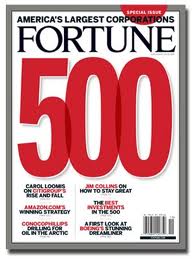 The largest 500 corporations in America employ millions of people—and the cost of healthcare for those people is in the billions. Walmart alone, in the #2 position on the 2012 Fortune 500 list, employs over two million people. Ford (9th largest) employs 165,000 and Bank of America (13th largest) employs almost 300,000. Whole Foods Market (264th largest) employs 60,000.
The cost of health care. In a 2012 Towers Watson Survey of 512 companies in the United States, the average cost of healthcare per employee was around $11,000, most of which is being paid by the employer. I recently saw a 5-minute video online (provided below) of the CEO of Whole Foods Market talking about the cost of health care.
He reported that health care is costing his company $200 million a year and that they have launched a new way of lowering those costs. They have started promoting health. He knows that “disease management” is very expensive and continues to go up each year—and he also knows that those costs can be reduced dramatically by simply helping employees learn to eat the right food. And that approach is paying off for Whole Foods.

John Mackey, Founder & CEO of Whole Foods Market
In the video, he reported that in just the past few years, the total cost of healthcare as a percent of sales had been declining. He has committed to building a strong “wellness culture” throughout the entire organization. He knows that not only does a healthy employee incur less costs, but that a healthy employee is more productive—and ultimately, better for the bottom line of the company.
A new kind of insurance. As a self-insured company, Whole Foods is in a great position to begin experimenting with a new idea that Dr. John McDougall is proposing. Most large employers are already in the health insurance business. But only a very few, like Whole Foods, who are beginning to seriously promote health—are well-positioned to set up a second insurance plan which will be offered only to employees who qualify.
 How do they qualify? By first being given education and training, then eating a much healthier diet and ultimately, achieving superior numbers when it comes to cholesterol, blood pressure, body mass index (BMI) and other key indicators. Once those employees have effectively taken charge of their own health, they would be offered the opportunity to join the “Healthy Employee Insurance” plan. And once they do, their monthly healthcare premium will go down by 50 to 75%.
And how does that plan work? As Dr. McDougall explained in his recent video on this topic, members of the new plan must understand that there are many things that will no longer be covered. Things like PSA tests, mammograms, aggressive treatment for diabetes and coronary artery disease, etc. This may shock some people at first—until they realize the facts. Healthy people, who’ve taken charge of their own health, will not need those kinds of treatments and tests and will not want to be paying the bill for those who do.

Dr. John McDougall
As news of this “insurance plan” spreads, more and more people will be motivated to qualify for it: sign up for the training, learn how to make the dietary transition as they begin to enjoy the many benefits of taking charge of their own health. I concluded long ago that it would be big corporations who would ultimately “tame the healthcare monster” in this country. That’s because they’re the only ones with a financial incentive to do so.
By creating a new kind of health insurance company within their corporation, these pioneering CEOs will be laying the groundwork for a complete overhaul of two major industries in this country: the food industry and the health industry. In the words of a famous American philosopher, this is what we have today:
People are fed by the food industry, which pays no attention to health…and are treated by the health industry which pays no attention to food.—-Wendell Berry
In this one-hour video by Dr. John McDougall, he explains in greater detail his “health insurance idea” discussed above. If you’re already familiar with Dr. McDougall, you should begin viewing the 27-minute mark. The first half of the video is devoted to his background.
When Dr. McDougall talked about doing away with PSA tests and mammograms, he backed up his statements with some hard facts by several highly respected organizations. One of them was the Cochrane Collaboration. Here’s how they describe themselves:
The Cochrane Collaboration is an international network of more than 28,000 dedicated people from over 100 countries.
Our vision is that healthcare decision-making throughout the world will be informed by high-quality, timely research evidence.” We work together to help healthcare providers, policy-makers, patients, their advocates and carers, make well-informed decisions about health care, by preparing, updating, and promoting the accessibility of Cochrane Reviews – over 5,000 so far, published online in the Cochrane Database of Systematic Reviews, part of The Cochrane Library.
Here is that John Mackey video mentioned earlier. Take five minutes to see how the Whole Foods CEO promotes health and brings down the cost of health care. A true win-win for all concerned.
 The Bottom Line. The health care system in this country will change and so will the food industry. It is inevitable. As a few pioneering CEOs begin teaching their people how to take charge of their own health, other CEOs will be forced to follow suit in order to be competitive. The food industry will follow suit and will produce the plant-based foods that the healthy people are now demanding.
This whole process must start somewhere. And it has, with CEO John Mackey at Whole Foods Market. Earlier in this blog, I mentioned the “wellness culture” that he is building at Whole Foods. It is important to emphasize that ALL employees should be included—not just the ones who have health benefits with the company.
Healthy employees, regardless of age or number of hours per week, are better employees. And better employees make for better, more profitable companies. The most successful CEOs will be those who weave “self-health-promotion” deeply into the cultural fabric of the enterprise. And the companies who choose not to promote health—will have trouble competing with those who do. (My 632nd consecutive daily blog)
- Earlier blog. Slashing the cost of health care in businesses
- Related blog. Are corporate wellness programs working?
- Related blog. Cost of healthcare: Top concern for small business CEOs
- Letter to Ford. Urgent letter to Bill Ford — Chairman of Ford Motor Company
- Data source. Towers Watson 2012 Survey on Purchasing Value in Health Care
- Link to the Cochrane Collaboration
- J. Morris Hicks. Experience and qualifications for “health promotion” consulting
Handy 4-piece take-charge-of-your-health kit—from Amazon.com
- The movie that’s changing the lives of millions: Forks Over Knives DVD
- Healthy Eating, Healthy World, The “big picture” about food (our book)
- An essential scientific resource: The China Study by Dr. T. Colin Campbell
- Dr. McDougall’s new book, The Starch Solution, with lots of great recipes.
Want to find out how healthy your family is eating? Take our free 4Leaf Diagnostic Survey. It takes less than five minutes and you can score it yourself. After taking the survey, please give me your feedback as it will be helpful in the development of our future 4Leaf app for smartphones. Send feedback to jmorrishicks@me.com

 International. We’re now reaching people in over 100 countries. Follow us on Facebook and Twitter or get daily blog notices by “following” us in the top of the right-hand column. For occasional updates, join our periodic mailing list.
To order more of my favorite books—visit our online BookStore now

J. Morris Hicks, working daily to promote health, hope and harmony on planet Earth.
For help in your own quest to take charge of your health, you might find some useful information at our 4Leaf page or some great recipes at Lisa’s 4Leaf Kitchen.
Got a question? Let me hear from you at jmorrishicks@me.com. Or give me a call on my cell at 917-399-9700.
SHARE and rate this post below.
Blogging daily at hpjmh.com…from the seaside village of Stonington, Connecticut – Be well and have a great day.
—J. Morris Hicks, board member, T. Colin Campbell Foundation



 A “Private Hotel” and “Pure Food,” PO Box 40, Ithaca, N.Y. 14851 | (607) 257-5349

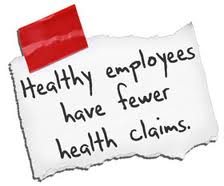
 Ultimately, this leads to a larger market share for the healthiest companies—and that’s what it’s all about in business!
  J. Morris Hicks, engineer. writer. big picture guy.